
 Image 1 of 3
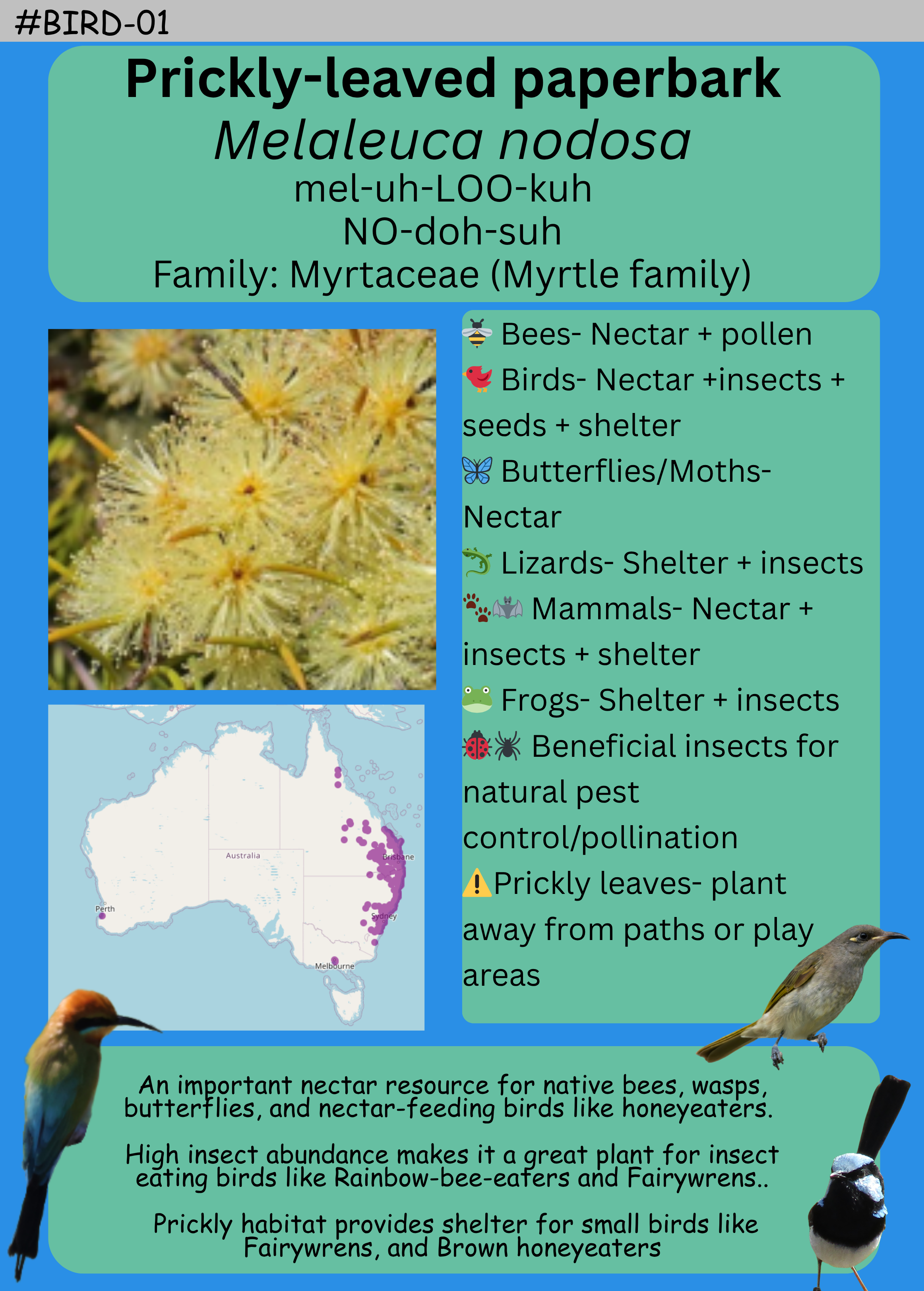 Image 2 of 3
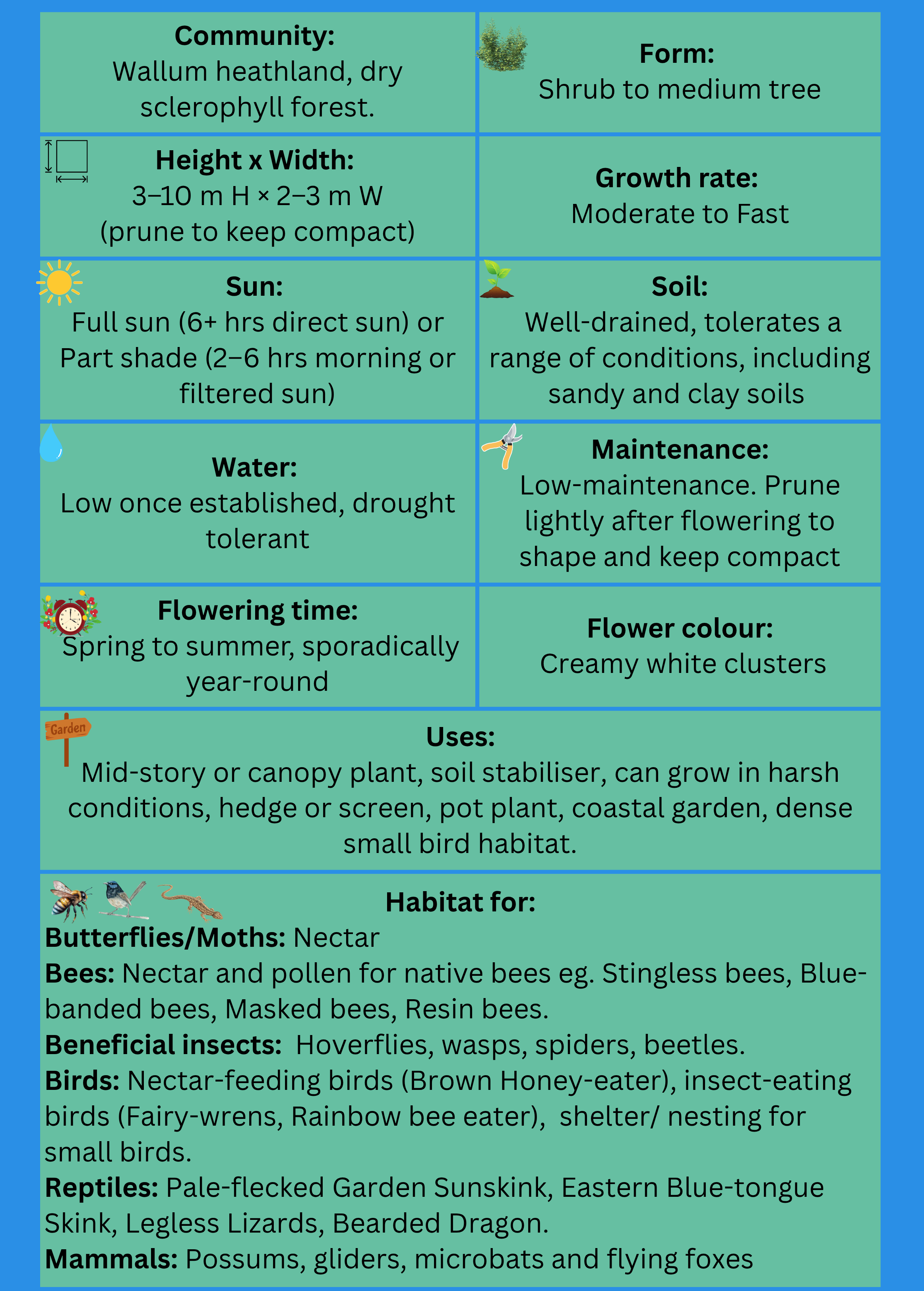 Image 3 of 3
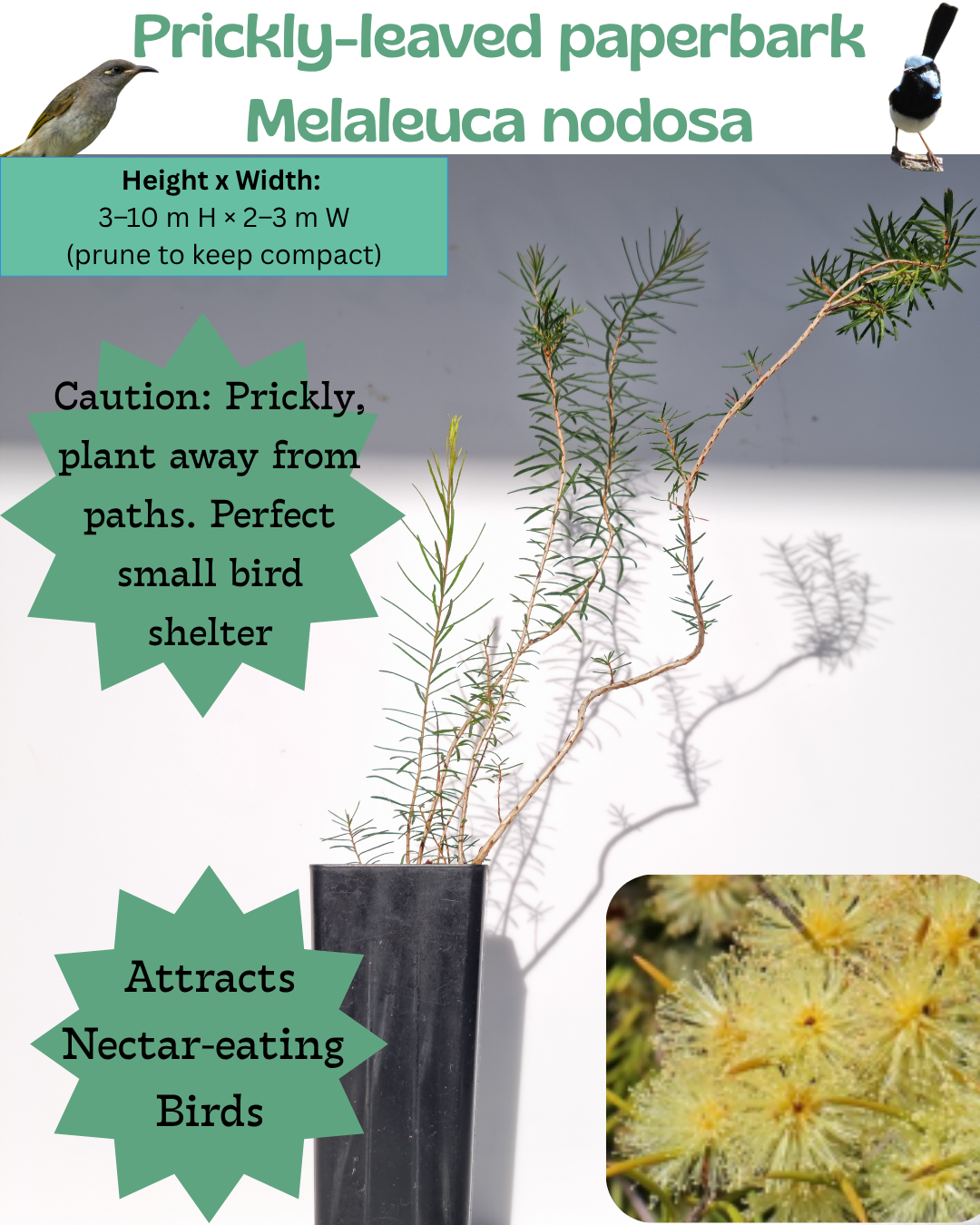
Prickly-leaved Paperbark (Melaleuca nodosa) is a tough, adaptable native shrub to small tree that thrives in harsh conditions while quietly supporting an enormous amount of wildlife. Its fine, prickly foliage forms dense shelter, while creamy white flower clusters appear from spring through summer (often with sporadic flowering year-round), providing valuable nectar and pollen. Ideal for hedges, screens, coastal gardens, or wildlife corridors, this species is a powerhouse for small birds and insects.
Plant size: Tubestock — sun-hardened, well-established, and ready to plant.
Bees:
Nectar and pollen for native bees including stingless bees, blue-banded bees, masked bees, and resin bees
Butterflies & moths:
Nectar source supporting adult butterflies and moths
Beneficial insects:
Hoverflies, wasps, spiders, and beetles — supporting natural pest balance
Birds:
• Nectar-feeding birds such as Brown Honeyeater
• Insect-eating birds including fairy-wrens and Rainbow Bee-eaters
• Dense structure provides excellent shelter and nesting habitat for small birds
Reptiles:
Supports Pale-flecked Garden Sunskink, Eastern Blue-tongue Skink, legless lizards, and Bearded Dragons through shelter and insect prey
Mammals:
Provides shelter and food resources for possums, gliders, microbats, and flying-foxes
Community:
Wallum heathland, dry sclerophyll forest
Form:
Shrub to medium tree
Sun:
Full sun (6+ hrs direct sun) to part shade (2–6 hrs morning or filtered sun)
Soil:
Well-drained; tolerant of a wide range of conditions including sandy and clay soils
Water:
Low once established; drought-tolerant
Maintenance:
Low-maintenance. Light pruning after flowering helps maintain shape and keep plants compact if desired.
Flowering time:
Spring to summer, with sporadic flowering throughout the year
Flower colour:
Creamy white clusters
Height × Width:
3–10 m high × 2–3 m wide
(Can be pruned to maintain a smaller, compact form)
Growth rate:
Moderate to fast
• Mid-story or small canopy tree
• Dense hedge or screen
• Coastal and wind-exposed gardens
• Soil stabilisation
• Pot planting when pruned
• Small-bird habitat and wildlife corridors
• Low-maintenance native gardens
Fun fact:
Despite its prickly leaves, Melaleuca nodosa is one of the best shelter plants you can grow for tiny birds trying to evade predators.
• Sun-hardened, well-established tubestock, ready to plant
• Tube stock care & planting guide
• Plant care sheet including:
– Seasonal tracker
– Wildlife tracker
– Nature-connection prompts
Designed to be kept and collected, helping you build your biodiverse garden over time.
Collector Binder (optional — $10, sold separately):
Store your plant care sheets and create a living record of your garden. Track wildlife visitors, seasonal changes, and plant growth — a fun, nostalgic way to reconnect with nature and get kids involved.
Every plant matters.
Whether you plant one Melaleuca or many, each one contributes to rewilding your space for birds, bees, butterflies, reptiles, and mammals — creating vital stepping stones across urban landscapes.
Orders are carefully prepared and ready within 1–3 business days.
Pickup options:
Plant stand at a cafe in Brighton, 4017
Home base- Kallangur,4503 - front door stand.
You will recieve an email from me once your order is ready to arrange pickup
Prickly-leaved Paperbark (Melaleuca nodosa) is a tough, adaptable native shrub to small tree that thrives in harsh conditions while quietly supporting an enormous amount of wildlife. Its fine, prickly foliage forms dense shelter, while creamy white flower clusters appear from spring through summer (often with sporadic flowering year-round), providing valuable nectar and pollen. Ideal for hedges, screens, coastal gardens, or wildlife corridors, this species is a powerhouse for small birds and insects.
Plant size: Tubestock — sun-hardened, well-established, and ready to plant.
Bees:
Nectar and pollen for native bees including stingless bees, blue-banded bees, masked bees, and resin bees
Butterflies & moths:
Nectar source supporting adult butterflies and moths
Beneficial insects:
Hoverflies, wasps, spiders, and beetles — supporting natural pest balance
Birds:
• Nectar-feeding birds such as Brown Honeyeater
• Insect-eating birds including fairy-wrens and Rainbow Bee-eaters
• Dense structure provides excellent shelter and nesting habitat for small birds
Reptiles:
Supports Pale-flecked Garden Sunskink, Eastern Blue-tongue Skink, legless lizards, and Bearded Dragons through shelter and insect prey
Mammals:
Provides shelter and food resources for possums, gliders, microbats, and flying-foxes
Community:
Wallum heathland, dry sclerophyll forest
Form:
Shrub to medium tree
Sun:
Full sun (6+ hrs direct sun) to part shade (2–6 hrs morning or filtered sun)
Soil:
Well-drained; tolerant of a wide range of conditions including sandy and clay soils
Water:
Low once established; drought-tolerant
Maintenance:
Low-maintenance. Light pruning after flowering helps maintain shape and keep plants compact if desired.
Flowering time:
Spring to summer, with sporadic flowering throughout the year
Flower colour:
Creamy white clusters
Height × Width:
3–10 m high × 2–3 m wide
(Can be pruned to maintain a smaller, compact form)
Growth rate:
Moderate to fast
• Mid-story or small canopy tree
• Dense hedge or screen
• Coastal and wind-exposed gardens
• Soil stabilisation
• Pot planting when pruned
• Small-bird habitat and wildlife corridors
• Low-maintenance native gardens
Fun fact:
Despite its prickly leaves, Melaleuca nodosa is one of the best shelter plants you can grow for tiny birds trying to evade predators.
• Sun-hardened, well-established tubestock, ready to plant
• Tube stock care & planting guide
• Plant care sheet including:
– Seasonal tracker
– Wildlife tracker
– Nature-connection prompts
Designed to be kept and collected, helping you build your biodiverse garden over time.
Collector Binder (optional — $10, sold separately):
Store your plant care sheets and create a living record of your garden. Track wildlife visitors, seasonal changes, and plant growth — a fun, nostalgic way to reconnect with nature and get kids involved.
Every plant matters.
Whether you plant one Melaleuca or many, each one contributes to rewilding your space for birds, bees, butterflies, reptiles, and mammals — creating vital stepping stones across urban landscapes.
Orders are carefully prepared and ready within 1–3 business days.
Pickup options:
Plant stand at a cafe in Brighton, 4017
Home base- Kallangur,4503 - front door stand.
You will recieve an email from me once your order is ready to arrange pickup