🌳 Bring wildlife back into your garden with this iconic native tree
Coastal Banksia is one of Australia’s most important wildlife trees.
When it flowers, it becomes a living food source for the entire ecosystem, feeding birds, bees, butterflies, and even small mammals when other plants have nothing to offer.
Plant it and you’re creating:
🐦 A feeding ground for honeyeaters and cockatoos
🐝 A rich nectar source for native bees
🦋 A stopping point for butterflies
🦇 Night-time food for flying foxes and microbats
🦎 Habitat through leaf litter and canopy structure
This is not just a tree, it’s a wildlife hub for your garden.
🌿 Why this tree matters
🌼 Flowers during autumn and winter when food is scarce
🐝 One of the highest-value nectar trees for native wildlife
🌱 Supports an entire food web (birds → insects → reptiles → mammals)
💪 Hardy, salt-tolerant, and incredibly resilient
💡 If you want to genuinely support wildlife, this is one of the most powerful plants you can put in the ground.
🌱 Where it grows best
☀️ Full sun
🌱 Sandy, loamy, or clay soils
🌊 Excellent for coastal conditions
💧 Low water once established
👉 Needs space, this is a long-term feature tree.
⚠️ Important to know
This tree grows big.
👉 You can prune to size or plant in a large pot or growbag
🪴 Perfect for
Feature tree in wildlife gardens
Coastal or wind-exposed properties
Habitat corridors and biodiversity plantings
Bird feeding gardens
Long-term rewilding projects
🐦 What you might notice
Honeyeaters feeding during flowering peaks
Yellow-tailed Black Cockatoos feeding on seeds
Butterflies and insects around flower spikes
Possums and flying foxes visiting at night
Birds nesting in the canopy over time
📦 What you’re actually getting
More than a plant — it’s a future habitat tree.
🌏 The bigger impact
Planting a Coastal Banksia means you are:
Restoring a critical winter food source
Supporting multiple layers of wildlife
Building long-term habitat structure in your area
This is how small gardens become part of something bigger.
📍 Pickup info
Ready in 1–3 days.
Pickup from:
🌳 Bring wildlife back into your garden with this iconic native tree
Coastal Banksia is one of Australia’s most important wildlife trees.
When it flowers, it becomes a living food source for the entire ecosystem, feeding birds, bees, butterflies, and even small mammals when other plants have nothing to offer.
Plant it and you’re creating:
🐦 A feeding ground for honeyeaters and cockatoos
🐝 A rich nectar source for native bees
🦋 A stopping point for butterflies
🦇 Night-time food for flying foxes and microbats
🦎 Habitat through leaf litter and canopy structure
This is not just a tree, it’s a wildlife hub for your garden.
🌿 Why this tree matters
🌼 Flowers during autumn and winter when food is scarce
🐝 One of the highest-value nectar trees for native wildlife
🌱 Supports an entire food web (birds → insects → reptiles → mammals)
💪 Hardy, salt-tolerant, and incredibly resilient
💡 If you want to genuinely support wildlife, this is one of the most powerful plants you can put in the ground.
🌱 Where it grows best
☀️ Full sun
🌱 Sandy, loamy, or clay soils
🌊 Excellent for coastal conditions
💧 Low water once established
👉 Needs space, this is a long-term feature tree.
⚠️ Important to know
This tree grows big.
👉 You can prune to size or plant in a large pot or growbag
🪴 Perfect for
Feature tree in wildlife gardens
Coastal or wind-exposed properties
Habitat corridors and biodiversity plantings
Bird feeding gardens
Long-term rewilding projects
🐦 What you might notice
Honeyeaters feeding during flowering peaks
Yellow-tailed Black Cockatoos feeding on seeds
Butterflies and insects around flower spikes
Possums and flying foxes visiting at night
Birds nesting in the canopy over time
📦 What you’re actually getting
More than a plant — it’s a future habitat tree.
🌏 The bigger impact
Planting a Coastal Banksia means you are:
Restoring a critical winter food source
Supporting multiple layers of wildlife
Building long-term habitat structure in your area
This is how small gardens become part of something bigger.
📍 Pickup info
Ready in 1–3 days.
Pickup from:

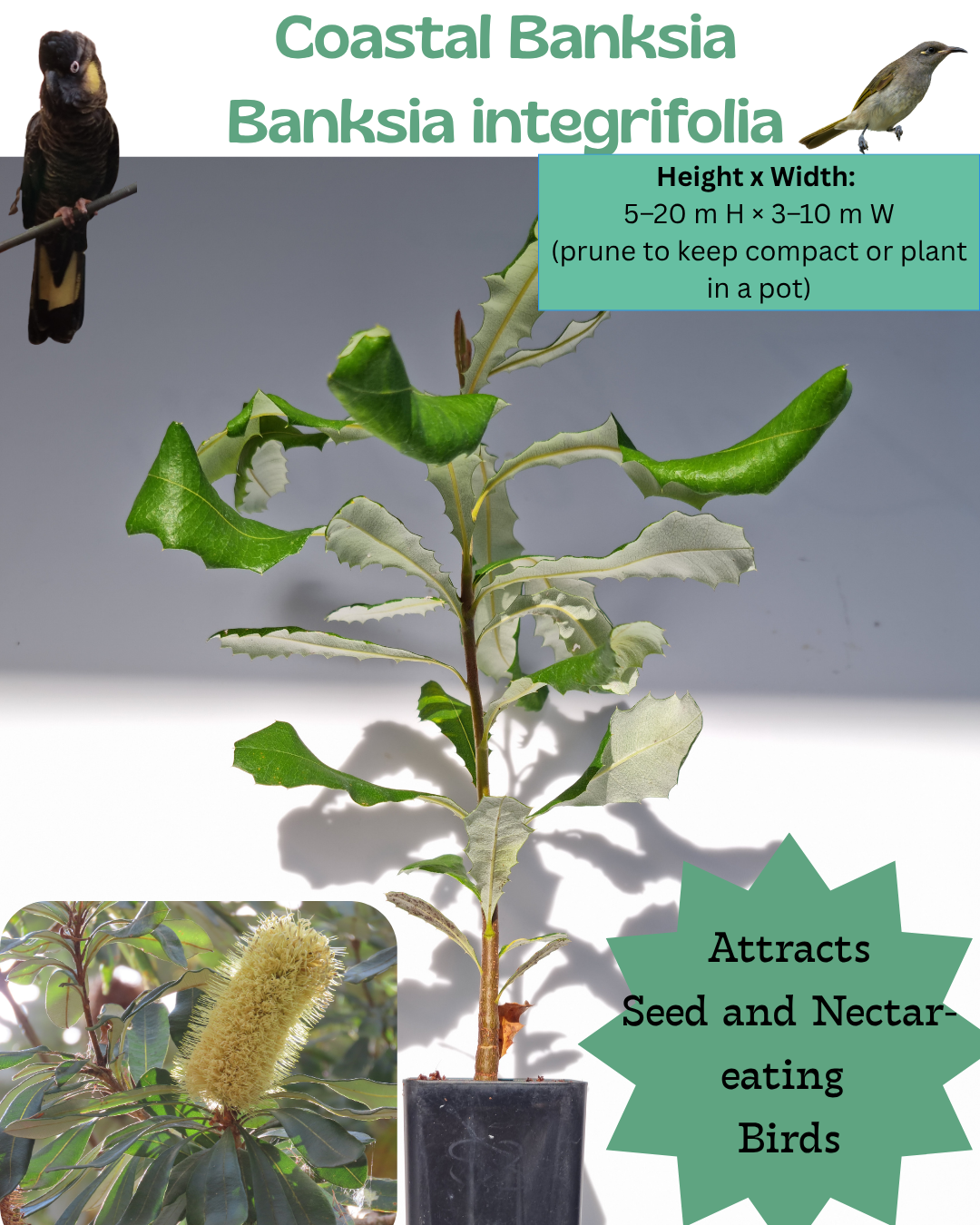 Image 1 of 3
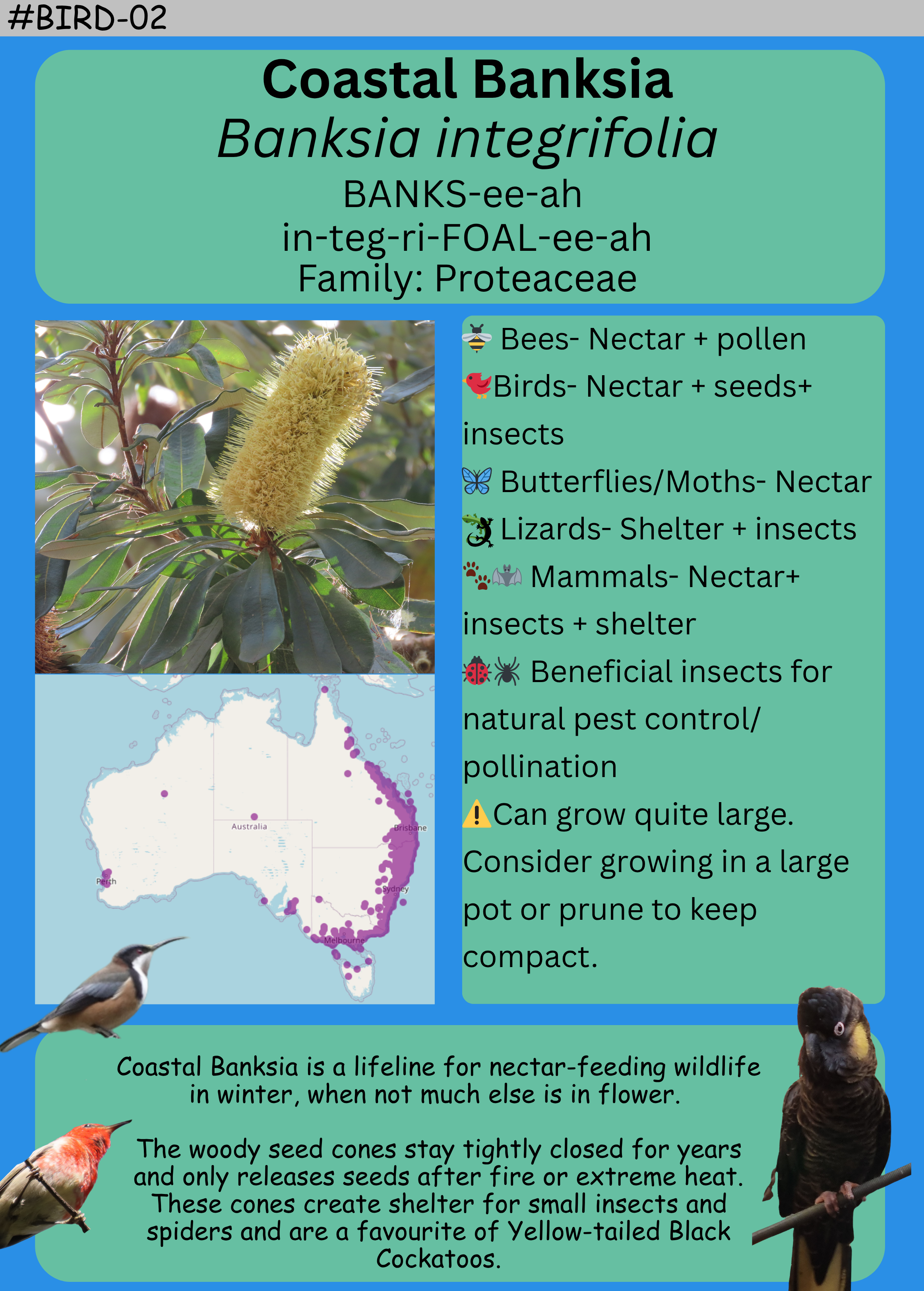 Image 2 of 3
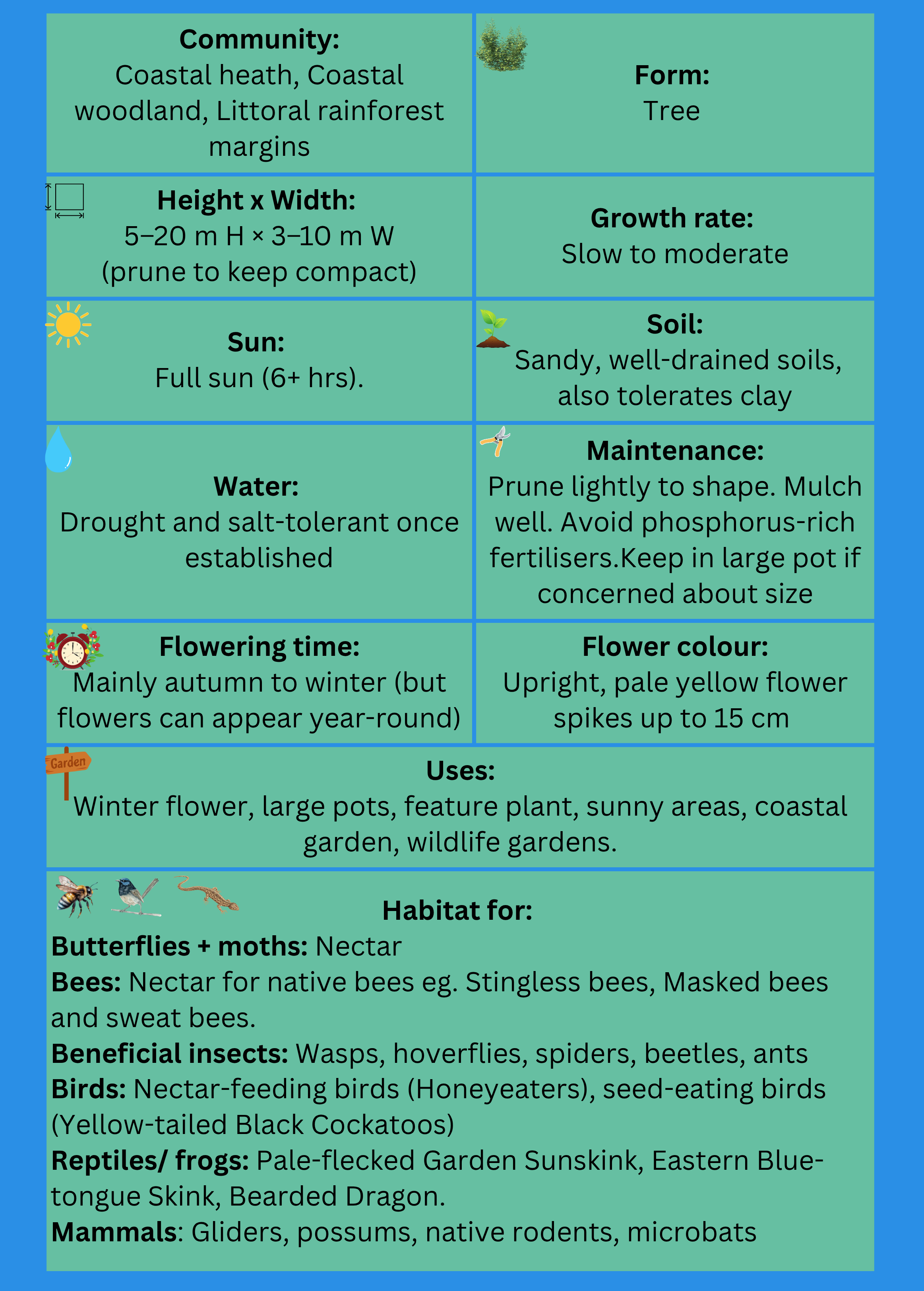 Image 3 of 3