
 Image 1 of 3
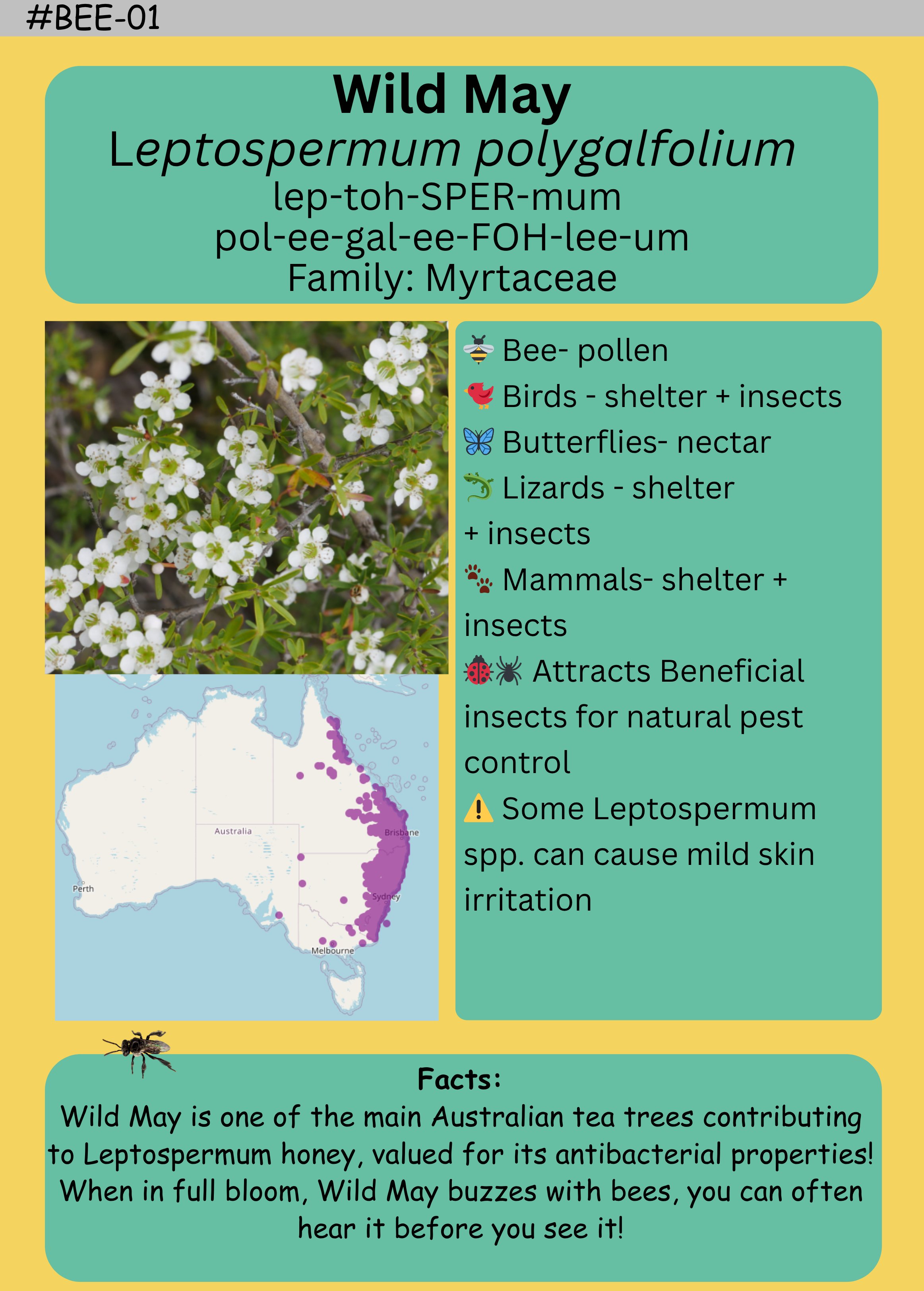 Image 2 of 3
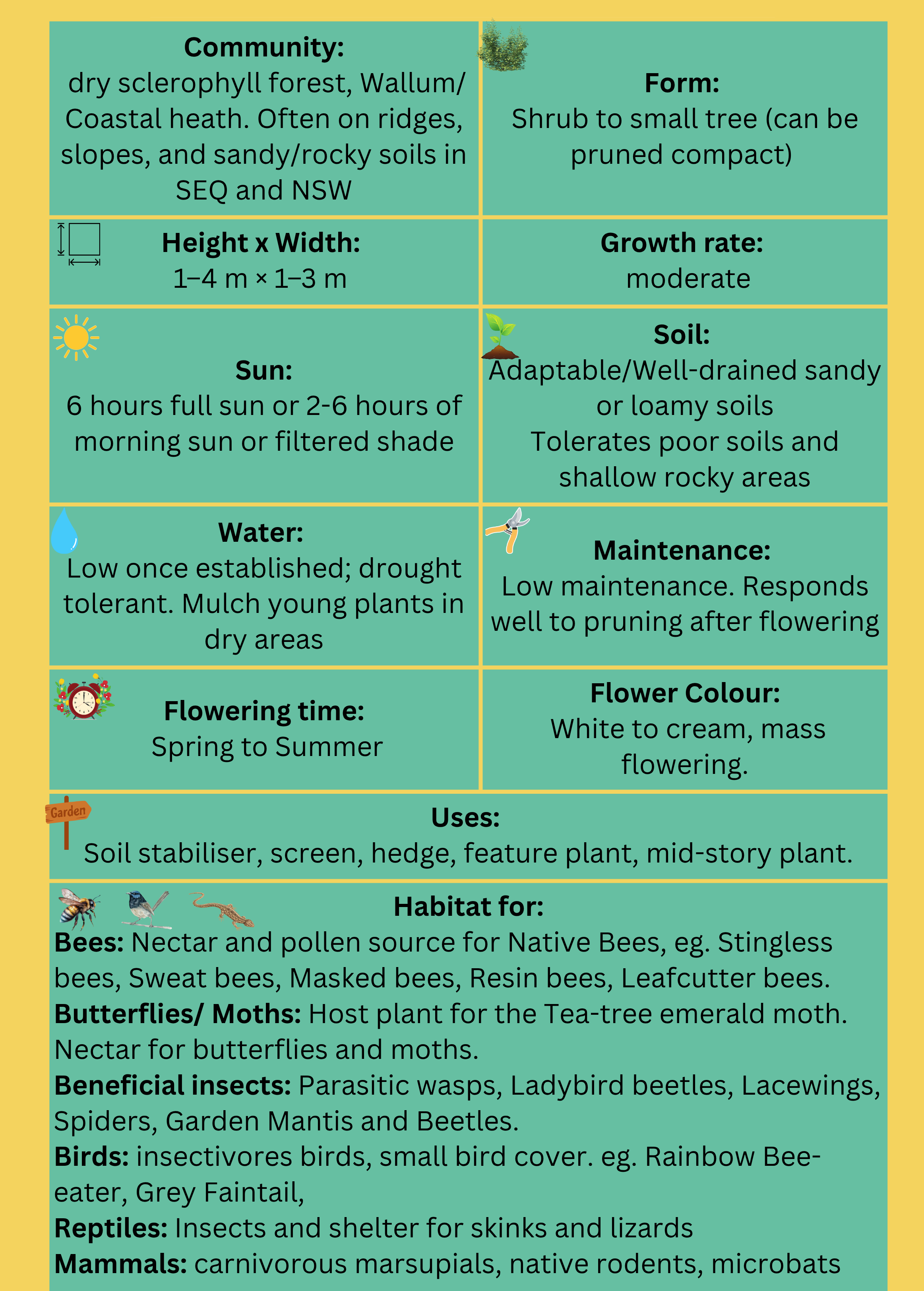 Image 3 of 3
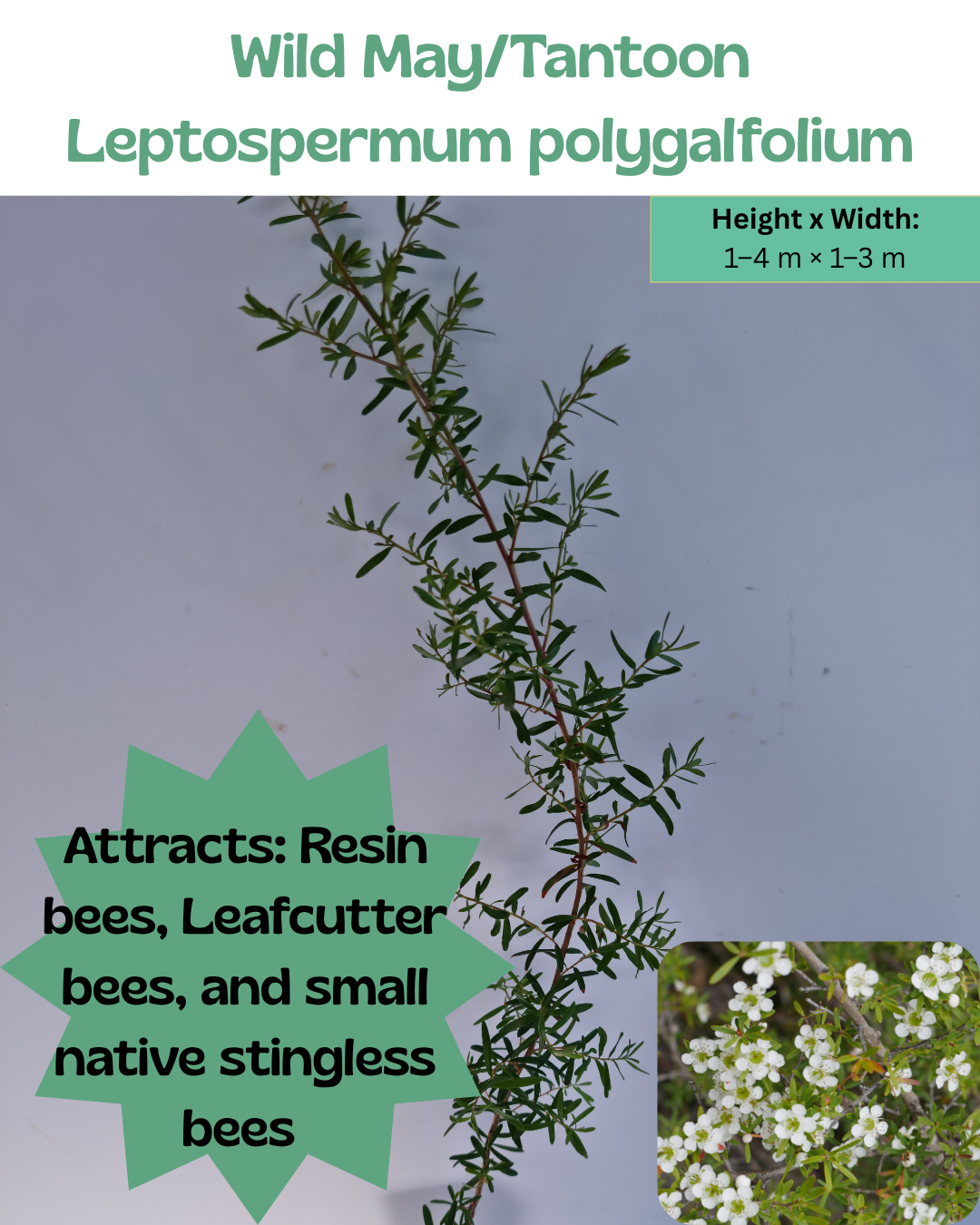
Wild May (Leptospermum polygalifolium) is a tough, versatile shrub to small tree producing masses of white to cream flowers in spring–summer, creating a buzzing hotspot for native bees, butterflies, and other wildlife. Its dense structure provides shelter for small birds and reptiles, while its adaptability to sandy, loamy, or shallow rocky soils makes it ideal for coastal, heath, and dry sclerophyll gardens.
Plant size: Tubestock — sun-hardened, well-established, and ready to plant.
Bees: Nectar and pollen for native bees, including Stingless bees, Sweat bees, Masked bees, Resin bees, and Leafcutter bees
Butterflies/Moths: Nectar for butterflies; host plant for Tea-tree Emerald Moth
Beneficial insects: Parasitic wasps, Ladybird beetles, Lacewings, Spiders, Garden Mantis, Beetles
Birds: Insectivorous birds; small-bird cover, e.g., Rainbow Bee-eater, Grey Fantail
Reptiles: Insects and shelter for skinks and other lizards
Mammals: Carnivorous marsupials, native rodents, microbats
Community: Dry sclerophyll forest, Wallum/coastal heath; often on ridges, slopes, and sandy/rocky soils in SEQ and NSW
Form: Shrub to small tree (can be pruned compact)
Sun: 6+ hrs full sun, or 2–6 hrs morning or filtered sun
Soil: Adaptable; well-drained sandy or loamy soils; tolerates poor soils and shallow rocky areas
Water: Low once established; drought-tolerant. Mulch young plants in dry areas
Maintenance: Low; responds well to pruning after flowering
Flowering time: Spring–Summer
Flower colour: White to cream; mass flowering
Height × Width: 1–4 m × 1–3 m
Growth rate: Moderate
• Soil stabiliser and erosion control
• Screen, hedge, or mid-story plant
• Feature plant in native and coastal gardens
• Pollinator and wildlife-friendly plantings
• Sun-hardened, well-established tubestock, ready to plant
• Tubestock care & planting guide
• Plant care sheet with seasonal tracker, wildlife tracker, and prompts to connect with nature
Collector Binder (optional — $10, sold separately):
Store your plant sheets, track wildlife visitors, and build a living record of your garden’s biodiversity. Perfect for kids and adults alike, inspired by ’90s collector nostalgia.
Every Wild May contributes to rewilding your garden, supporting birds, bees, butterflies, and reptiles, helping create thriving local ecosystems.
Orders are prepared and ready within 1–3 business days.
Pickup options:
Plant stand at a cafe in Brighton, 4017
Home base- Kallangur,4503 - front door stand.
You will recieve an email from me once your order is ready to arrange pickup
Wild May is one of the main Australian tea trees contributing to Leptospermum honey, valued for its antibacterial properties! When in full bloom, the plant buzzes with bees — you can often hear it before you see it!
Wild May (Leptospermum polygalifolium) is a tough, versatile shrub to small tree producing masses of white to cream flowers in spring–summer, creating a buzzing hotspot for native bees, butterflies, and other wildlife. Its dense structure provides shelter for small birds and reptiles, while its adaptability to sandy, loamy, or shallow rocky soils makes it ideal for coastal, heath, and dry sclerophyll gardens.
Plant size: Tubestock — sun-hardened, well-established, and ready to plant.
Bees: Nectar and pollen for native bees, including Stingless bees, Sweat bees, Masked bees, Resin bees, and Leafcutter bees
Butterflies/Moths: Nectar for butterflies; host plant for Tea-tree Emerald Moth
Beneficial insects: Parasitic wasps, Ladybird beetles, Lacewings, Spiders, Garden Mantis, Beetles
Birds: Insectivorous birds; small-bird cover, e.g., Rainbow Bee-eater, Grey Fantail
Reptiles: Insects and shelter for skinks and other lizards
Mammals: Carnivorous marsupials, native rodents, microbats
Community: Dry sclerophyll forest, Wallum/coastal heath; often on ridges, slopes, and sandy/rocky soils in SEQ and NSW
Form: Shrub to small tree (can be pruned compact)
Sun: 6+ hrs full sun, or 2–6 hrs morning or filtered sun
Soil: Adaptable; well-drained sandy or loamy soils; tolerates poor soils and shallow rocky areas
Water: Low once established; drought-tolerant. Mulch young plants in dry areas
Maintenance: Low; responds well to pruning after flowering
Flowering time: Spring–Summer
Flower colour: White to cream; mass flowering
Height × Width: 1–4 m × 1–3 m
Growth rate: Moderate
• Soil stabiliser and erosion control
• Screen, hedge, or mid-story plant
• Feature plant in native and coastal gardens
• Pollinator and wildlife-friendly plantings
• Sun-hardened, well-established tubestock, ready to plant
• Tubestock care & planting guide
• Plant care sheet with seasonal tracker, wildlife tracker, and prompts to connect with nature
Collector Binder (optional — $10, sold separately):
Store your plant sheets, track wildlife visitors, and build a living record of your garden’s biodiversity. Perfect for kids and adults alike, inspired by ’90s collector nostalgia.
Every Wild May contributes to rewilding your garden, supporting birds, bees, butterflies, and reptiles, helping create thriving local ecosystems.
Orders are prepared and ready within 1–3 business days.
Pickup options:
Plant stand at a cafe in Brighton, 4017
Home base- Kallangur,4503 - front door stand.
You will recieve an email from me once your order is ready to arrange pickup
Wild May is one of the main Australian tea trees contributing to Leptospermum honey, valued for its antibacterial properties! When in full bloom, the plant buzzes with bees — you can often hear it before you see it!